
Promise of Jesus’ return and abundant life
Announcements
THE Christian hope is supported by promise of Jesus’ return. This moment, known as parusia, guides communities. This article shows how this hope is linked to the idea of life in abundance that Jesus taught.
In Mexico, this belief greatly affects the church and society. The desire for the Lord’s return and to live fully moves families and communities.
We want to explain important things from the Bible and offer advice for everyday life. We also discussed how to discern the signs of our times. And you will see examples of how this is lived in Mexico today.
Announcements
We use the Bible, religious studies and real-life examples to guide us. We want it to be easy for everyone to understand. You will thus be able to strengthen your faith in a practical, Scriptural way.
Key findings
- THE promise of Jesus’ return nourishes the Christian hope and guides Community ethics.
- THE life in abundance in the Gospels combines spiritual dimension and social commitment.
- In Mexico, the union of the eschatology and full life is reflected in pastoral practices and local projects.
- The article offers biblical and theological tools for responsible reflection on end times.
- Priority will be given to biblical sources, theological studies and verifiable Community initiatives.
What the Promise of Jesus’ Return Means
The expectation of Jesus’ return is central to the Christian faith. It brings hope, judgment and a promise of renewal. Both in Mexico and around the world, believing in his return impacts how we live together and personally.
Biblical Basis for the Promise
The gospels, such as Matthew 24–25 and Luke 21, mix warnings with consolation. John 14 talks about getting back together. Acts 1:9-11 describes the time when Jesus ascends into heaven and promises to return.
Paul’s letters provide further details. In 1 Thessalonians 4 and 1 Corinthians 15 they speak of resurrection and union in renewed bodies. The Apocalypse It shows visions of the end and important truths. “Parousy” it means the coming of the Lord; “the apocalypse” refers to the revelation of the end.
Historical and theological interpretations
There are different ways to understand these texts. Some believe in a literal future kingdom; others see symbolism in the predictions. Some expect positive changes in the world before Return of the Christ.
Figures such as Augustine and Barth offered symbolic interpretations and discussed justice and the resurrection. Difficult events in history have caused people to reinterpret these ideas constantly.
How It Has Influenced Christian Practice
This promise influences how we worship, preach and dedicate ourselves to the mission. Hymns and prayers often recall the parousia.
Missionaries have been working motivated by this urgency. Ethics and the call to live in a holy way are also inspired by this hope.
The effects can be very good, like a stronger community and greater service. But having only expectation can lead to passivity or fear. Church histories reflect both consolation and warnings in the face of extreme interpretations.
Abundant Life – The Concept and Its Biblical Roots
THE life in abundance is highlighted in the Gospels as what God wants for us. It teaches us that true wealth is not in things, but in connection with God, justice and sharing love.
By analyzing John 10:10, we see that Jesus promises to give life in abundance. This verse shows us that the fullness of life is in fellowship, service and spiritual growth. Other parts of the Gospels also emphasize living by the Kingdom, seeking peace and purpose.
Biblical definition in the Gospels
John 10:10 It is essential to understand that the life in abundance It focuses on Christ. In the gospels, abundance means reconciliation, forgiveness and justice more than having many possessions.
Similar texts portray Jesus as fostering wholesome, meaningful relationships. Evangelical teaching links fullness of life with compassion, learning and community.
Comparison with Material and Spiritual Well-Being
Today, many see the Christian prosperity as material wealth. But the Bible makes a clear distinction between tangible and spiritual well-being It’s deep.
Luke and Matthew use parables to question how we use our possessions and the importance of caring for souls. THE spiritual well-being It brings peace, purpose and unity to social justice.
Practical examples of abundant community life
Churches live this abundant life through discipleship and pastoral accompaniment. These activities foster personal development and support among members.
Health and education initiatives blend physical care with spiritual growth. Mutual aid, prayer and the sacraments enrich the spirit and strengthen the community.
| Scope of application | Practical | Impact on the ecclesial community |
|---|---|---|
| Discipled | Bible studies and mentoring | Spiritual Maturity and Servant Leadership |
| Pastoral follow-up | Visits, counselling and monitoring | Crisis support and personal growth |
| Social work | Health and education projects | Improvement of material conditions and dignity |
| Spiritual Practices | Prayer, the sacraments, reconciliation | Spiritual Health and sense of community |
Promise of Jesus’ return and abundant life
The promise of Jesus’ return is not just for the future. It gives hope and guides our actions today. Communities use this hope to improve society now.

Relationship Between Eschatological Hope and the Present Life
Believe in the Return of the Christ It motivates us to seek justice and healing today. Pastors and laity see hope for the future as a guide to action in the present.
THE T IS Wright explains how hope for the future and Christian Ethics They support each other. This vision turns the promise into a guide for our conduct.
How the Promise Motivates Pursuit of a Fulfilling Life
The hope of Jesus’ return gives us strength in difficult times. People in parishes and movements keep their spirits up to help constantly.
Actions like praying together, participating in the sacraments and volunteering enrich our lives. These acts of faith become tangible help: support for families, emotional accompaniment and health projects.
Evidence linking the two realities
In Mexico City and Guadalajara, lay leaders say the pledge has strengthened their desire to serve. They talk about how the hope for a better future led to family reconciliation.
Groups like Caritas and social pastorals combine faith in the future with community work. Their stories prove that hope is not about escaping reality, but changing it today.
Signs and Expectations – Understanding the End Times
The debate on the Signs of the End arouses curiosity and restlessness. Combining Bible study with pastoral prudence is key. So we avoid alarms and foster healthy dialogue in the community.
Biblical signs and their contemporary interpretation
Wars, earthquakes, false messiahs and increasing evil are in the Gospels and The Apocalypse. Today, many try to connect these signs with current situations. It’s important to separate symbolism from fact.
To interpret, you have to get away from predicting dates and understand the apocalyptic genre. Experts like Raymond E. Brown and N. T IS Wright help us to understand texts in their context without making forced comparisons.
Avoiding sensationalism: responsible criteria
Sensationalism leads to fear and division. Using a good method of interpretation, knowing the context and being humble when interpreting helps. This reduces the risk of exploitation and conflict within the community.
Shepherds should avoid accurate predictions and focus on upbuilding messages. Transparent churches gain trust and stability in their community.
Counsel for Discerning End-Time Messages
It is vital to check the sources and compare different translations. The Jerusalem Bible and scholarly commentaries warn us against misinterpretations. Consulting recognized theologians brings balance to our understanding.
Trusting respected leaders and prioritizing teachings of love and service is key. Prayer, group study and church attendance help us to avoid falling into alarmism.
| Appearance | Indicator | Recommended action |
|---|---|---|
| Other sources | Translations and academic commentary | See the Jerusalem Bible, N. T IS Wright, this is Raymond E. Brown |
| Method to be used | Historical and literary context | Apply exegesis and avoid date calculations |
| Pastoral work | Responsibility and Humility | Prioritizing community care and avoiding exploitation |
| Practical | Spiritual Discernment | Prayer, dialogue and comparison of sources |
| The risk | Alarmism | Encouraging messages of hope and service |
Practical implications for everyday life
The return of Jesus fills our day with hope. Little things like our routines, decisions and acts of kindness unite our faith with the world around us. So our faith is shown by practical actions, not just words.
We present ideas and examples for your home or community. Each idea mixes our daily spiritual life with special moments of faith and helping others.
Spirituality Guided by Hope
Starting the day with a brief Lectio divina gives us direction. Five minutes of prayer in the morning brings peace to our hearts. Participating in the sacraments strengthens our bond with our community.
Meditating on the Bible’s promises can help us to remain calm in times of distress. These activities draw us closer to God and keep our hope alive.
Ethical choices and lifestyle
Choosing righteously reveals our Christian morality in how we spend our money. Being responsible in purchasing and avoiding unnecessary things shows that our faith influences our actions.
Doing work that benefits society or being generous with our money reveals what we value. Making peace within the family and with others improves our relationships and reflects a full life.
Service and Mission as an Expression of Abundant Life
Serving others makes our hope real. Volunteering in places like community cafeterias, caring for the sick or helping out at learning centers are ways to live our mission and serve.
Churches and groups in Mexico often lead projects that combine spirituality with social aid. These actions show that a full life means sharing our talents and time with others.
Next, you’ll find a table showing activities to add to your week. They will be of great spiritual help and bring social benefits. This table is a practical guide for communities and households.
| Practical | Spiritual Effect | The social outcome |
|---|---|---|
| Lectio divina in the morning (10 minutes) | Clarity and Hope | More Compassionate Decisions |
| Family Evening Prayer | Unity and Inner Peace | Healthier family relationships |
| Sharing in the Sacraments | Community support | Effective support networks |
| Responsible consumption | Ethical consistency | Reduced environmental impact |
| Work with social impact | Vocational satisfaction | Direct benefit to communities |
| Volunteering in canteens or clinics | Compassion in Action | Improving local quality of life |
| Accompanying the sick | Humanize the Faith | Reduction of insulation |
The Promise in Mexican Christian Tradition
The expectation of Jesus’ return and the yearning for a better life are present in Mexican Christian traditions. They manifest themselves in feasts and devotional practices both at public events and in daily spiritual life. This occurs in communities of all sizes.
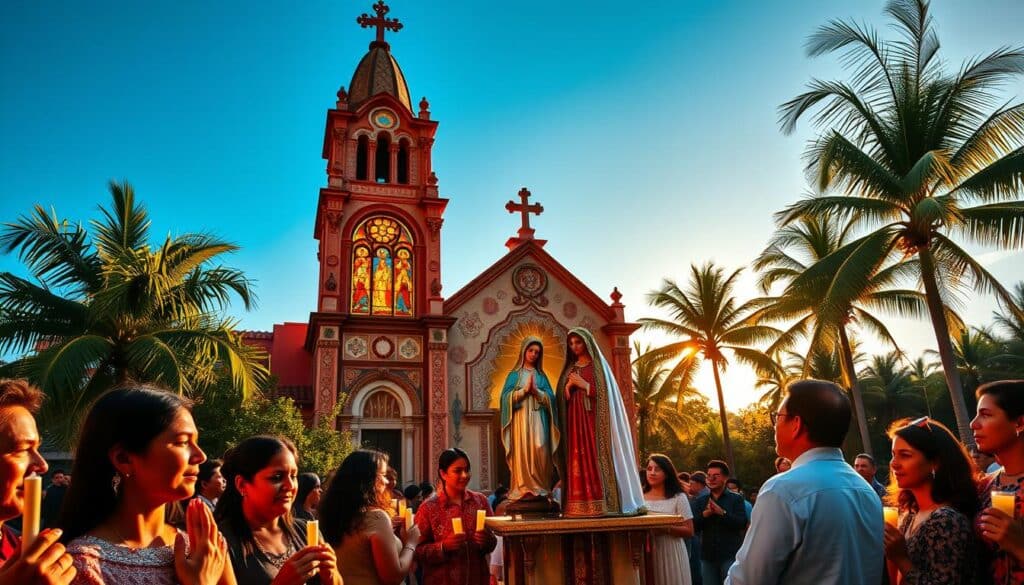
Celebrations are a show of hope. During Holy Week, processions and performances recall the promised salvation. The feasts of patron saints also reflect this hope with songs and prayers that celebrate the Lord’s coming.
Local churches and movements greatly influence Mexican Christianity. Popular Catholicism holds devotions that offer comfort and hope. Evangelical movements and charismatic communities, in turn, emphasize spiritual renewal and confidence in the future.
Faith is manifested in concrete actions. The Catholic Church promotes social support initiatives in vulnerable areas. In turn, Protestant and evangelical churches offer food and shelter, emphasizing dignity and hope.
Faith can have a great social impact. In Ciudad Juárez and Tijuana, there are shelters for migrants with the support of churches and religious NGOs. Community canteens in Mexico City, linked to parishes, feed those in need.
In Oaxaca, educational projects seek equality through scholarships and learning spaces. Social justice movements have united believers of different faiths in the struggle for rights and dignity.
The following table shows how different beliefs are involved in social good. It provides useful information about their impact on the community.
| Religious expression | Pastoral focus | Examples of social action | Geographical areas |
|---|---|---|---|
| Popular Catholicism | Sacramental celebration and community devotions | Parish canteens, family support programmes | Mexico City, Puebla, State of Mexico |
| Charismatic communities | Spiritual Renewal, Intense Community Life | Emotional support groups, leadership workshops | This Regulation shall be binding in its entirety and directly applicable in all Member States |
| Evangelical movements in Mexico | Preaching Hope, Practical Discipleship | Migrant shelters and rehabilitation programmes | ♪ I’m the one that got away ♪ |
| Catholic social action organisations | Full service, defence of the vulnerable | Community schools, mobile clinics, legal advice | Other, of a kind used for motor vehicles |
Obstacles and frequently asked questions about the promise of abundant life
Connecting the hope of Jesus’ return to our daily life can be complex. We solve common questions and offer advice for coping with grief. We also showed you where to find more information.
Common Theological Questions and Clear Answers
People wonder when Jesus will return. The sacred texts do not specify a specific date. This encourages us to live mindfully and responsibly, without waiting for an appointed time.
Does this mean that those who suffer are forgotten? No, I did not. Bible stories teach that hope and pain can coexist. This promise gives support and meaning while we actively wait.
Some believe that the abundant life means having a lot of money. But Jesus’ teaching shows that the important things include love, peace and helping others, not just material possessions.
Coping With Suffering in the Light of Promise
Hope helps us to get through difficult times. It offers comfort through Bible verses and prayer. It also provides practical support through therapy and community groups.
Specialists in theology teach us to balance pain and hope. His ideas help us to understand suffering while maintaining our faith.
Stories of resilient people inspire us. They share rituals and support groups that help us find new meaning after a loss.
Reliable resources to go deeper
We recommend such Bibles as the Jerusalem Bible and the Revised Standard Version. For those interested in deeper studies, the works of N. T IS Wright and Ben Witherington III are very helpful.
You will find good material in theological literature on hope and how to meet challenges. Search seminary libraries in Mexico for Bible guides and commentaries.
To learn more, look to churches and theological colleges. They offer courses, libraries and workshops on these faith topics and how to cope with suffering.
How to Teach the Promise of Return and Abundant Life in Church and Family
To teach about Jesus’ promise and a meaningful life, we need clear materials. These must be appropriate to the Mexican context. It is essential to use resources that everyone understands, from children to adults. In this way we strengthen the faith of families and communities.
Effective teaching materials and methods
Using Bible study guides in Spanish unifies the contents. Furthermore, adapting teaching to each age improves learning.
- Audiovisual resources that are easy to use for everyone.
- Methods such as field trips and dramatizations make learning fun.
- Online tools to track your progress.
Speaking simply and using local examples enhances teaching.
Activities for children, young people and adults
When we propose specific activities, everyone participates more in the church. It helps bring families together.
- For children: interactive stories, crafts and educational songs.
- Youth: talks on hope, social projects and leadership workshops.
- Adults: practical theology courses, discipleship groups and reflections.
Having short tests helps us better understand and see how it impacts our lives.
Creating spaces for dialogue and hope in the community
By creating safe spaces to talk about the future, we avoid fear and build trust. Listening and support is key to moving forward in the faith.
- Pastoral counseling for difficult questions.
- Forums to share between all ages.
- Retreats that encourage commitment and community living.
Including these practices in church programs unites families. In addition, it promotes constant religious education in the home.
Contemporary Witnesses and Examples
In communities in Mexico City and elsewhere, stories emerge. They show the Christian hope in action. Faith and social work go together, improving lives and communities.
Personal reports of transformation
María Hernández from Guadalajara tells us about her emotional recovery. Participated in support groups. His life changed with improved mental health and family relationships.
Alejandro Méndez in Monterrey found his way with the help of workshops. It’s part of stories of faith that show real change.
Community projects reflecting abundant life
Organisations promote initiatives such as community cafeterias and courses. They increase employment, reduce hunger and strengthen communities. Caritas Mexicana and the Migrant Support Center lead these actions.
A cafeteria in Puebla and a center in Oaxaca show the benefits. The combination of training and spiritual support produces lasting changes.
Interviews and inspiring voices
We want to interview Christian leaders in Mexico, like Cardinal Carlos Aguiar Retes. They bring vision about hope in action.
The participation of catechists and laymen is enriched by various perspectives. It connects personal cases with community successes, adding to our collection of faith stories.
To capture the impact, we’ll collect data and testimonies. It highlights personal change and project success while maintaining the human narratives that motivate it.
Conclusion
The Christian hope we share speaks of a full life, filled with real and practical hope. Jesus’ return is more than an idea; it directs our faith and shapes the way we live. It encourages us to pursue peace and help our community.
This view of life motivates us to take specific steps. We should learn more about the Bible, get involved in our community and use quality resources. Study Bibles, seminar courses and materials from reputable publishers are available.
This summary also calls us to pastoral action, creating programs of help and training. This is for youth, families and church leaders. The aim is to serve, accompany and educate.
Finally, we make a call not to leave it for later helping others. Living with purpose and love can make a difference. Churches and families should speak out and share their faith. So we will convert our hope into actions that improve our communities in Mexico.
FAQ
What the Promise of Jesus’ Return Means (Freshwater fish) According to the Bible?
Parousia is the belief that Jesus will return. This idea is based on various texts such as Matthew 24–25. Parousia motivates to live with hope, leading an ethical and community life.
How the promise of return relates to ‘life in abundance’ in John 10:10?
John 10:10 It talks about living a full life with God, including peace and purpose. The promise of return motivates us to change today. It encourages us to practice love and service now so that we may have life in abundance.
Does an abundant life necessarily imply material prosperity?
No, the abundant life is more than having things. Focus on growing spiritually and serving others. It counters the belief that it means only economic success.
What theological currents exist about Jesus’ return?
There are various theories such as premillennialism and amillenialism. People like Augustine and N. T IS The Wrights explored these themes. These ideas help us to understand parusia at different times.
How can I discern messages about “the signs of the times” without falling into sensationalism?
It’s important to use responsible methods to understand these messages. Compare sources and consult with trusted leaders. Choose teachings of love and avoid speculation. It helps keep you focused on community and prayer.
What influence does the hope of Christ’s return have on pastoral and community practice?
Hope influences how we live our faith each day. It inspires us to preach holiness and help others. It guides church activities and crisis response.
What spiritual practices help to live hope and abundant life day by day?
Such practices as lectio divina and prayer strengthen our faith. Participating in sacraments and helping the community is also crucial. Such habits draw us closer to God and others.
How to Cope With Suffering in Light of the Promise of Return
Accepting Scriptural comfort and seeking pastoral support is vital. To acknowledge pain without losing faith in the promise. Support groups and grief resources are important as we rely on God.
What reliable resources can I consult to delve deeper into these topics?
Explore well-known translations and commentaries by experts such as N. T IS It was Wright. Also, follow studies by theologians and resources for pastors. Attending theological courses is helpful in understanding more.
How is this subject taught in the church and family without alarm?
Use age-appropriate material and encourage conversation. Creative activities and retreats can help you understand without fear. This promotes a balanced and practical view.
Are there examples in Mexico of projects that integrate eschatological hope and abundant life?
Yes, you did. Social projects throughout Mexico show this faith in action. Community canteens and educational centres are examples. Many communities are actively improving society inspired by their faith.
What theological questions are most frequently asked, and how are they briefly answered?
People wonder when Jesus will return; the Bible does not give a date. They ask if there will be suffering; hope sustains us in those moments. Also if the abundant life is wealth; in reality, it’s about relationship with God and serving others.