Calming the Mind – Effective Techniques and Tips
Announcements
These days, almost everyone faces turmoil and stress frequently. Approximately 70% of Brazilians deal with the stress. This shows how crucial it is to learn to relax the mind.
This text sets out methods of relaxation for the day. They increase the well-being and help you stay calm. You will discover 10 effective ways to reduce stress and have more peace.
Introduction to Stress and Its Causes
Stress happens when we face challenges. It makes the body and mind react. Often it comes from problems or situations that need to be resolved, causing symptoms that interfere with our health.
Announcements
There are a number of reasons for stress to appear. Some of them are:
- Overcharging at work
- Financial problems
- Family and relationship issues
- Social Pressure and Personal Expectations
According to the International Association for Stress Management (Manufacture from materials of any heading), Understanding what causes stress is very important. If we don’t deal with these problems, the stress will only get worse. Knowing what causes stress and why is the first step to taking better care of ourselves.
Relaxation Techniques to Calm the Mind
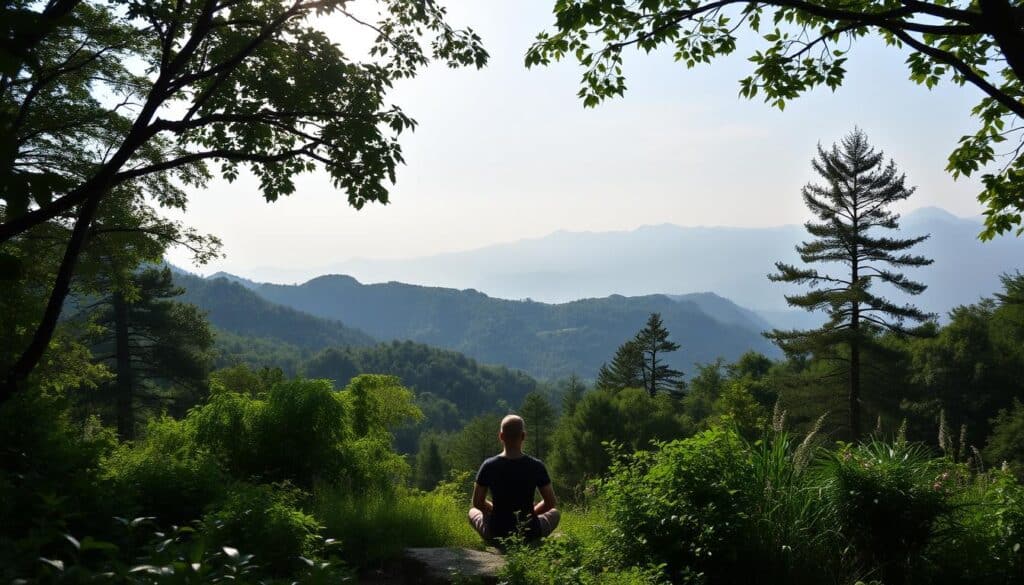
Taking care of the mind is as essential as taking care the body. The relaxation techniques are important for the well-being emotional and to reduce stress. With the rush of daily life, it is vital to have relaxation exercises to calm the mind. It brings peace to our moments.
- Meditating: A few minutes of meditation can change your mental state.
- Diaphragmatic breathing: It’s an effective technique against anxiety.
- Guided viewing: Think of quiet places to relax.
- Muscle Relaxation Progressive: voltage and relaxation of the muscles reduce physical tension.
- Aromatherapy: Essential oils They bring peace.
Those relaxation techniques are simple to make and offer a break in the rush, helping Calm the mind and renewing energies.
Meditation – A Path to Calmness
THE meditation It’s very good for achieving calm and clear thoughts. It helps a lot with mental health. When we meditate every day, we begin to cope better with stress.
Benefits of Meditation for Mental Health
It brings many benefits to our mind. This includes:
- Increased concentration and focus.
- Reduced anxiety and depression.
- Improved quality of sleep.
- Promoting a state of relaxation It’s deep.
How to Start a Meditation Practice
To start meditating, follow these steps:
- Choose a quiet place, free from distractions.
- Start with short sessions, five to 10 minutes.
- Take a deep breath and focus on your breathing.
- If your mind wanders, gently return to focus on the breath.
- Gradually increase the time and explore different techniques such as mindfulness or meditation guided.
Diaphragmatic Breathing to Relax
Known as abdominal breathing, the diaphragmatic breathing It’s essential for relaxation. It helps calm the mind and body, reducing stress and anxiety.
When practicing, you should breathe deeply using your diaphragm. It increases oxygen in the body, relaxing the nervous system.
Adding this practice to the daily routine brings continuous relaxation. Regular practice decreases tension and increases well-being.
Guided View: Transporting Yourself to Tranquility
THE Guided viewing He uses his imagination to create quiet places. This method helps the mind to forget everyday worries. To start, find a quiet place, close your eyes and imagine places of peace and serenity.
There are several visualisation techniques for the day. Here are some ideas:
- Imagine yourself on a quiet beach, listening to the waves and feeling the breeze.
- Visualize a flower field where your worries disappear.
- Think of it as a safe, cozy place to relax.
Those visualisation techniques help you find calm and peace. They are simple and can be used by anyone who wants to reduce stress and feel more at ease.
Progressive muscle relaxation
THE muscle relaxation In addition, a progressive reduction in the muscle tension of the day. You tense and relax different muscle groups to completely relax.
This technique makes you more aware of your body. It helps reduce stress and anxiety. In addition, it improves your mental health and emotional.
To begin with, find a quiet place. Follow these steps:
- Comfortably, close your eyes and take a deep breath.
- Start with the feet. Tense your muscles for a few seconds.
- Then relax and feel the sensation of calm.
- Keep going with your legs, stomach, arms and face, doing the same thing.
If you regularly muscle relaxation Progressively, you will feel improvements. Not only physically but also in your mind, bringing peace and calm.
Body Scanning – Awareness and Relief
THE body scan helps increase self-awareness and relieves stress. It makes you pay attention to every part of your body. It helps to find hidden tensions and discomforts. By focusing on specific areas, the mind becomes more alert. So the body can show you what it needs.
Getting to know your own body better comes with the practice of scanning. It’s good to be relaxed and in a quiet place to do that. You start by focusing on your breath. Then the attention shifts to your feet, feeling every detail. Gradually, awareness rises to the legs, trunk and arms. Finally, you reach for your face and relax completely.
Doing body scan It often improves sleep and reduces anxiety. This simple technique is great for everyday use. It helps to keep life more balanced and mindful.
Aromatherapy: The Use of Essential Oils
THE aromatherapy help us in our well-being emotional and physical through Essential oils. Each scent has specific properties. For example, lavender helps to relax and chamomile soothes.
You can use aromatherapy in different ways, such as:
- Diffuse the oils into the environment to relax space.
- Add to baths for more intense relaxation.
- Do massages using diluted oils to soothe the muscles.
Add the aromatherapy It can be great for anxiety and to feel more at peace. Try using different Essential oils and see which one works best for you.
The Importance of the Digital Disconnect
Nowadays, it’s critical to digitally disconnect in order to maintain the mental health. Being constantly online and receiving a lot of information through social networks can be overwhelming. This creates a pressure that increases stress.
Disconnecting helps us reduce stress. When we get away from screens and do things offline, like reading or walking in nature, we feel better. These activities improve our well-being and sleep quality, which is very good for the mind.
Pausing for a while and staying away from digital can help you think more clearly. Taking time to enjoy the present moment without distractions from technology helps us live a more balanced and healthy life.
Conclusion
Practicing relaxation techniques regularly is crucial for Calm the mind and reduce stress. These strategies improve our mental well-being and quality of life.
Meditation, deep breathing and aromatherapy help to cope with daily stress. Each of these techniques helps us to find peace and emotional balance.
Seeking quiet and making time for introspection are important goals. Finding inner peace is a path that improves mental health in the long run.
FAQ
What are the common symptoms of stress?
Anxiety and worry, irritability, sleeplessness, and headaches are symptoms of stress. High heart rate and digestive problems are also common. It’s important to recognize these signs early. So you can get help and use relaxation techniques.
How can meditation help to reduce stress?
Meditation calms the mind. He does this by focusing his attention on the present moment. This reduces stress and helps you to cope with everyday challenges.
What types of meditation are recommended for beginners?
Mindfulness and guided meditation are good for beginners. They help to start the practice of meditation. And they provide a foundation for achieving calm and mindfulness.
How can I practice diaphragmatic breathing?
Find a quiet place and sit or lie down comfortably. Put one hand on your chest and the other hand in your abdomen. Breathe in through your nose, letting the abdomen expand. Exhale through your mouth slowly. Do that for a few minutes.
What is progressive muscle relaxation?
It’s a technique that relaxes tense muscles. It involves tensing and then relaxing different muscle groups. This helps release tension and brings relaxation to the body and mind.
How does the guided visualization work?
You close your eyes and imagine relaxing places, like a beach or forest. It helps to disconnect from stress. And it reduces anxiety by promoting tranquility.
What essential oils are effective in aromatherapy?
Lavender, chamomile and eucalyptus are great for relaxing. They can be used in diffusers, baths or massages. They help promote emotional well-being.
Why is it important to disconnect from electronic devices?
Disconnecting helps reduce the information overload. It gives a rest to the mind. Improves sleep and general well-being.
How often should I practice these relaxation techniques?
Practicing these techniques every day brings better results. Being consistent builds habits that help reduce stress. And it improves your emotional state.